From the farmOctober 13, 2026
The Five Values on the Grow Room Screen
Indoor farms watch five values: temperature, humidity, carbon dioxide, light, and nutrient solution. Here's what each one means to a plant, and why they have to be read together rather than one at a time.
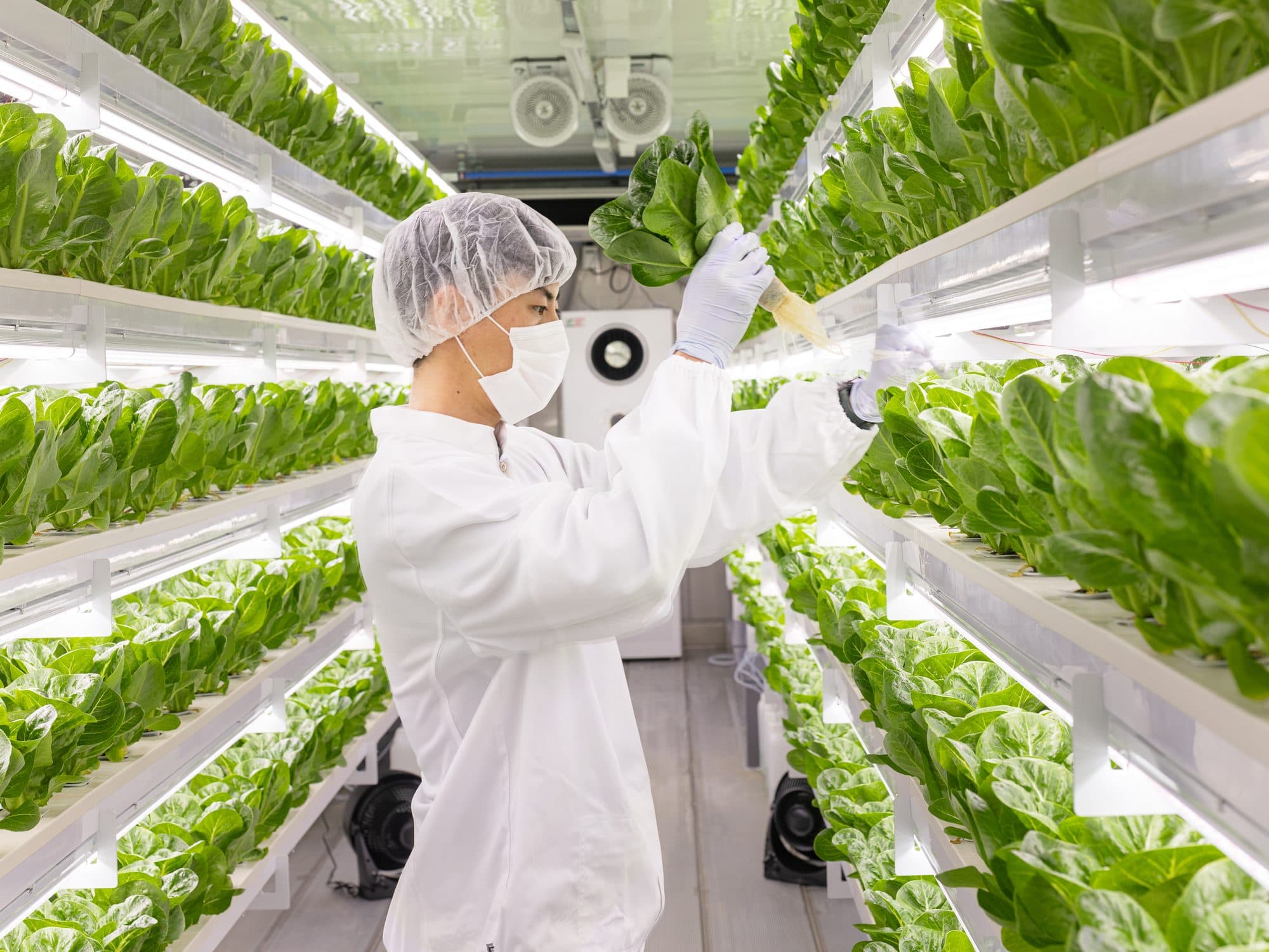
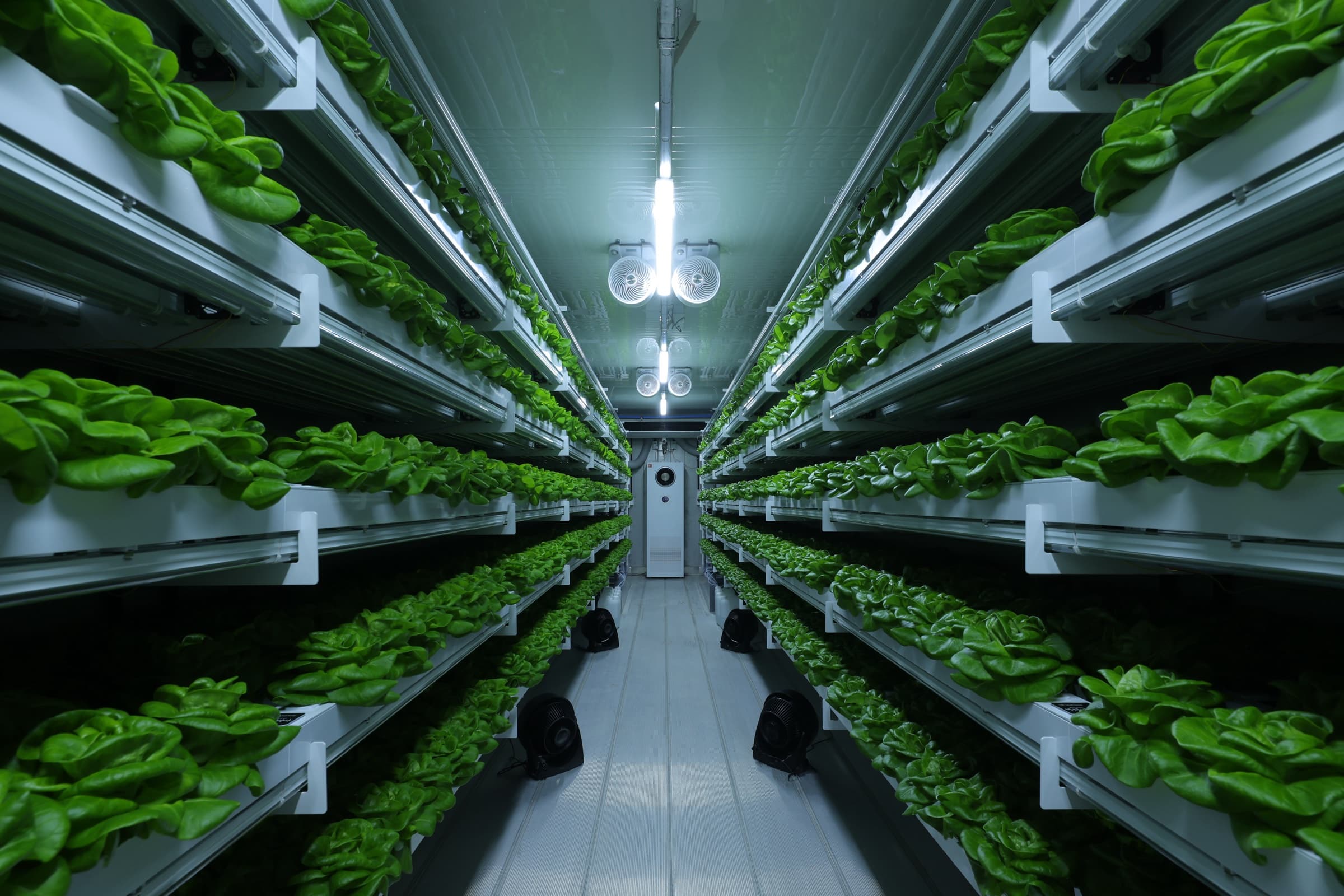
Out in the field, you look at the sky. You decide the day's work by whether it will rain and how far the night temperature will fall. An indoor farm has no sky. It has a screen instead. N.THING gathers a farm's temperature, humidity, carbon dioxide, light intensity, and nutrient solution values minute by minute and views them all on a single screen.
There are only five values, but each one carries a different meaning for the plant. Taking leafy greens such as lettuce as the reference, here is what each one tells us.
Temperature: the speed of growth
Temperature sets how fast a plant grows. A review paper published this March in the journal Frontiers in Horticulture by researchers at institutions including the University of Turin in Italy names temperature as one of the most influential environmental factors governing plant growth and development. In lettuce, growth rate, weight, and the occurrence of physiological disorders such as tipburn are all said to depend heavily on temperature.
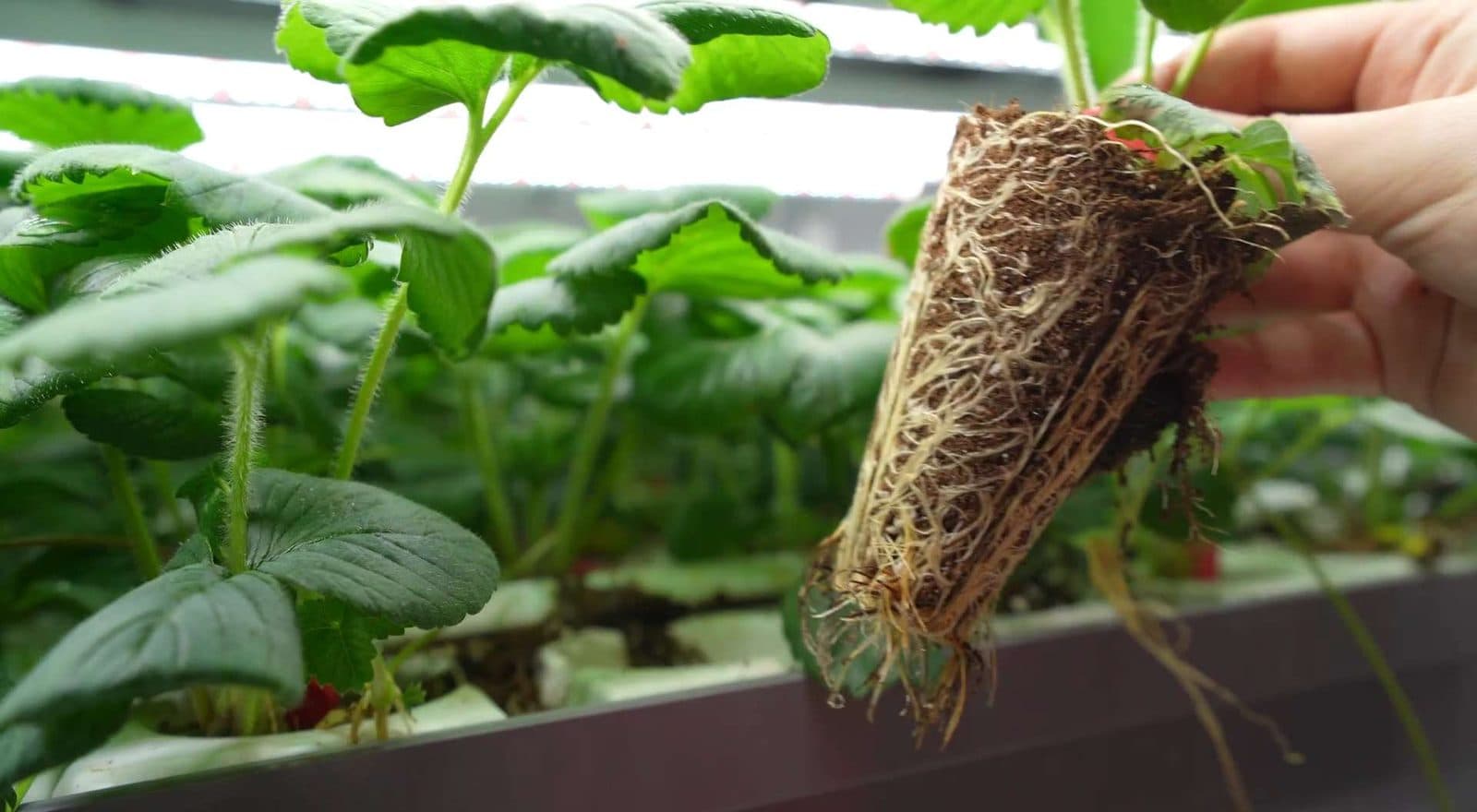
And it is not only the air that matters. The same paper explains that the temperature around the roots directly affects water and nutrient uptake and root function. In hydroponics, the temperature of the nutrient solution is the temperature the roots live in.
Humidity: the speed at which water moves
Humidity may look like a question of dry versus damp, but to a plant it is the speed at which water passes through its body. A plant draws water up through its roots, releases it from its leaves as vapor, and nutrients travel along that stream of water.
The paper notes that when humidity is high, the water leaving the leaves and the flow of sap within the stem both decrease, nutrient movement is blocked, and deficiencies and physiological disorders follow. The tipburn covered in a previous post is one such example. So humidity is not a value that is better the lower it goes, nor better the higher it goes. The paper, too, concludes that a mid-range level is the best fit for growing lettuce.
Carbon dioxide: the raw material of photosynthesis
Plants take in light and make nutrients from carbon dioxide and water. Carbon dioxide is the raw material. According to the paper, the current concentration of carbon dioxide in the atmosphere is not enough to push photosynthesis to its limit, which is why raising the carbon dioxide level in the growing space is an effective approach for crops such as lettuce.
In a closed space, this value does not stay still. It drops by as much as the plants consume. A value you never had to think about in a field becomes a value to manage indoors.
Light: more is not always better
In an indoor farm, light comes from LEDs rather than the sun. How brightly and for how many hours a day to run them is decided by people. The paper reports a clear proportional relationship between the total amount of light lettuce receives and its weight, while also explaining that a plant's condition deteriorates when light is excessive, just as it does when light is insufficient. Light, too, is a value with an appropriate range.
Nutrient solution: concentration and acidity
Last is the water the roots touch. With nutrient solution, two things are usually watched: the concentration (EC), which indicates how much nutrient is dissolved, and the acidity (pH), which indicates whether it is acidic or alkaline.
The hydroponic nutrient solution management materials from the National Institute of Horticultural and Herbal Science of the Rural Development Administration describe nutrient solution concentration as an important factor determining a crop's growth, yield, and quality. The appropriate acidity range is 5.5–6.5, and outside this range nutrient uptake is inhibited and growth suffers. In other words, even if the nutrients are fully dissolved in the water, the roots cannot take them in if the acidity is off.
We don't read them separately
We have listed the five side by side, but in the field they are not read separately. The values are bound to one another. The paper explains that temperature and light do not act independently but together to regulate photosynthesis and growth. If you raise the light to make plants grow faster, water and nutrients must move that much more as well, and if humidity is high at that moment, trouble tends to show up first in the youngest leaves.
That is why N.THING brings all five values together on one screen. N.THING builds an environment that controls all of light, temperature, humidity, carbon dioxide, and nutrients, and uses the resulting data to set the parameters for the next crop cycle. Looking at a screen instead of the sky also means deciding the weather instead of waiting for it.
You can see N.THING's farms and cultivation technology on the Solutions and Technology pages.