TechnologyOctober 23, 2026
What the Farm Does When No One Is There
Problems in a vertical farm usually happen when no one is around. Here's what the equipment at an N.THING farm does first when the temperature rises, CO₂ runs low, or the water supply is cut off.
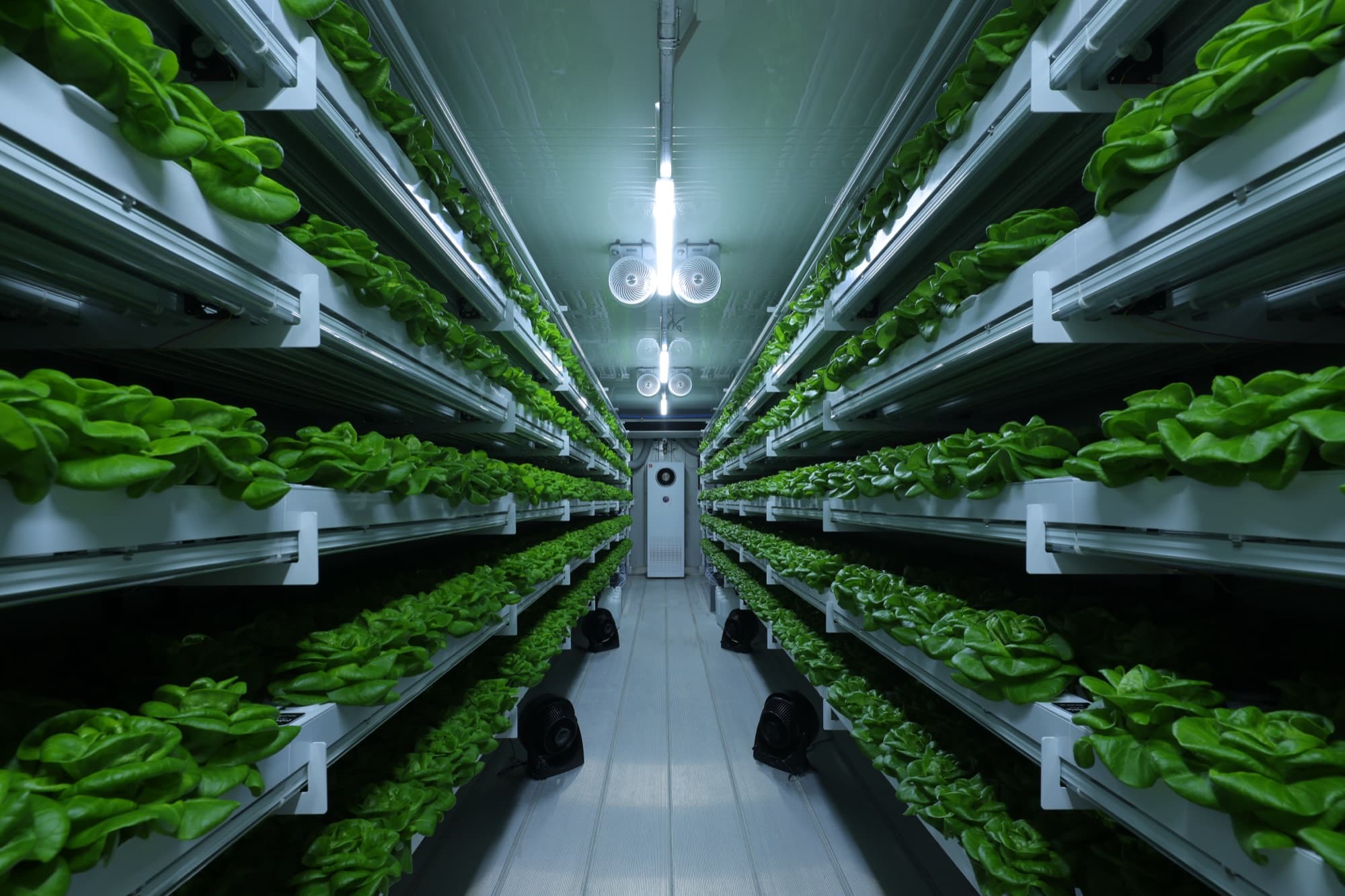
A vertical farm's grow room keeps running through the night. The hours when the lights turn on and off are determined by setpoints rather than the sun outside, and the HVAC and nutrient solution systems never rest. People are not always there. That is why, when designing a farm, there is a separate question we have to ask: what happens if something goes wrong when no one is around?
At N.THING, we call our answer to that question the Farm Safety System. It is designed so that the equipment detects anomalies on its own and responds before a person arrives. Here are four representative cases.
When the temperature rises: shut off the heat sources
Inside a sealed grow room, the lights and equipment all generate heat. If an HVAC unit fails, the temperature can climb quickly, and leafy greens like lettuce are vulnerable to heat.
If equipment failure drives the temperature up, every heat source in the farm is shut off automatically. Fixing the cause is a person's job, but keeping the temperature from climbing further in the meantime is something the equipment does first.
When CO₂ runs low: switch tanks
Plants take in carbon dioxide while they receive light and use it to produce nutrients. In a grow room sealed off from outside air, CO₂ has to be supplied separately.
When the main cylinder runs out, the system automatically switches to the supply tank. It is a mechanism designed to keep the supply uninterrupted.
When the water is cut off: turn off the lights
This is the least intuitive of the four responses. If the water supply is cut off, the light sources are shut off automatically.
Plants that receive light photosynthesize, and that much water leaves through their leaves. If light keeps being supplied while no water is coming in, the plants keep using water they cannot replenish. Turning off the light suppresses photosynthesis, buying the plants time to hold out until the water comes back.
Other emergencies: call a person
Equipment cannot resolve every case on its own. So emergencies are detected in real time and an alarm is sent to the person in charge.
This detection builds on everyday monitoring. N.FARM.AI, N.THING's farm operations platform, collects temperature, humidity, CO₂, light intensity, and nutrient solution values minute by minute. The same values that normally serve as cultivation records become the basis for an alert the moment they fall outside the set range. We introduced the values shown on the grow room screen in a previous post.
Protect first, then call
The order is the same in all four responses. The equipment moves first so the crops are not harmed further, and the repair work is handed over to people. To maintain the same quality even during the hours when no one is there, what happens in the minutes after something goes wrong has to be decided in advance.
You can learn more about N.THING's cultivation technology on our Technology page.